
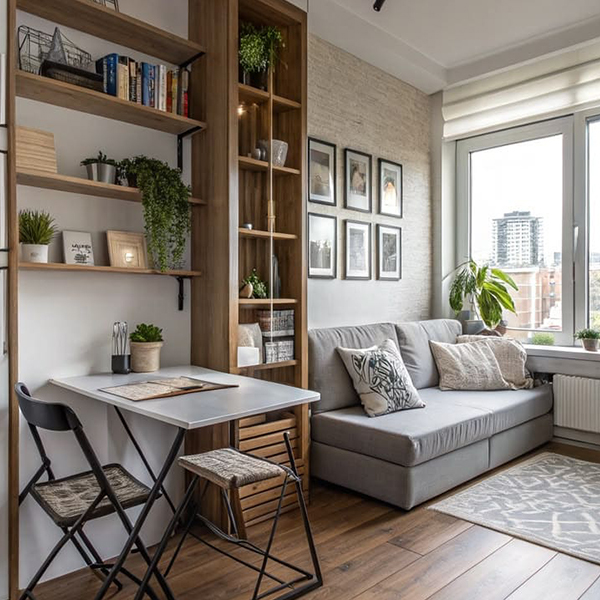
Space Design vs. DIY Layout Planning: Why Fort Worth Homeowners Stop Guessing and Call a Professional
Most homeowners underestimate how much goes into designing a space that is both functional and beautiful. That gap between expectation and reality is exactly where DIY layout planning breaks down.
It starts with the best intentions. You move the couch to the other wall. You shift the bookshelf. You try a different arrangement you saw on a video. The room still feels off, and you cannot figure out why.
This is not a taste problem. It is a planning problem.
Good space design is not just about what goes where. It is about flow, meaning how people move through a room. It is about proportion, meaning how pieces relate to the size of the walls and ceiling. It is about function, meaning how the room supports the way you actually live in it, not just how it looks in a photo.
These are skills that take time to develop. When you work with us at The Organized Nest, you skip the learning curve entirely and go straight to the result.

Key Takeaways
DIY layout planning wastes time and energy. Wrong arrangements, poor flow, and underused storage leave you living in a space that never feels quite right.
Professional space design looks at the whole picture, including traffic patterns, lighting, storage, and how you actually use the room.
Small spaces are harder to design well, not easier. The margin for error is much smaller, and every decision counts.
Time Savings: Space design services save time, reduce frustration, and produce results that last without trial and error.
Local Expertise: The Organized Nest brings design thinking to every project, from a single bedroom to a full home layout in Fort Worth and nearby areas.
When you see a space that just works, where everything feels intentional and nothing feels forced, professional space design is almost always behind it.
What Professional Space Design Actually Involves
Space design is more involved than most people expect. A professional does not just rearrange furniture. They assess the room from multiple angles and build a plan that accounts for factors most homeowners never think to consider.
Here is what that process typically covers:
Traffic flow. How do people enter and move through the room? A poorly placed piece of furniture can make a large room feel like an obstacle course.
Zones. Most rooms serve more than one purpose. A living room might need a seating area, a reading corner, and a play space for kids. A professional designs each zone to function independently without competing with the others.
Storage. Every room has hidden storage potential. A space design service identifies it and builds it into the plan from the start, not as an afterthought.
Scale and proportion. The right furniture for a room is not just about style. It is about size. A piece that works in one room can completely overwhelm another, depending on the ceiling height, window placement, and square footage
Lighting. Natural and artificial lighting change how a space feels completely. A good design plan accounts for both.
When all of these elements are considered together, the result is a room that feels finished, not just assembled.
DIY vs. Professional Space Design: A Side-by-Side Look
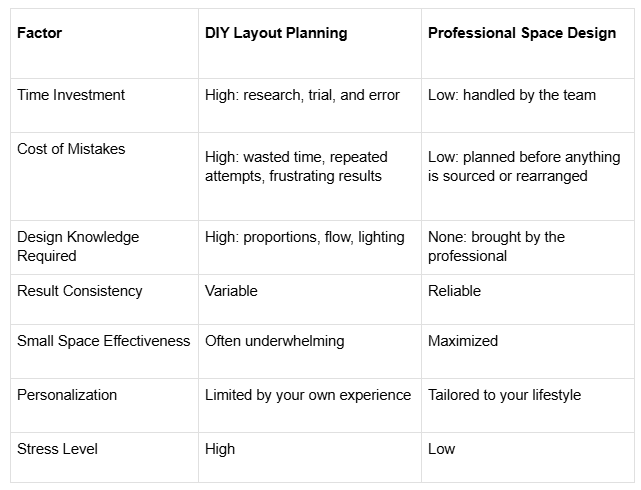
The comparison is not meant to make DIY look bad. For small, low-stakes projects, doing it yourself makes sense. But for rooms in a home you have invested in, rooms you live in every day, professional space design services are the smarter move.
Why Small Spaces Are the Hardest to Get Right
Here is something that surprises a lot of homeowners:Small rooms are actually harder to design in than large ones,and knowing how to design in a small space well is a skill most homeowners never need to develop until they are standing in a room that just does not feel right.
When you are working with limited square footage, every inch matters. One wrong-sized piece and the whole room feels off. One poorly placed cabinet and the traffic flow breaks down completely. Bedroom designs for small spaces or room design ideas for small spaces in general require a level of precision that goes well beyond picking colors and furniture.
According to the U.S. Census Bureau, the average size of a new single-family home in the United States has decreased in recent years, meaning more homeowners are figuring out how to design in a small space without sacrificing comfort or style.
That trend has made space design skills more valuable, not less.
When a professional designs a small bedroom or a compact living area, they use a specific set of strategies: vertical storage to draw the eye up, smart arrangement of existing pieces, and light management that makes the space feel larger than it is.
These are not tricks you stumble onto. They are learned through experience, and they make a real difference in how a small room feels to live in.
The Hidden Cost of Getting It Wrong
Most people do not factor in the real cost of DIY space planning until after they have done it. The real cost is the time spent rearranging and still ending up with a room that does not feel right. It is the frustration of trying layout after layout and never quite getting there. It is living with a space that works against you instead of for you.
While there is no formal study, most homeowners who plan their own spaces report higher rates of dissatisfaction with the final result compared to those who use professional design services.
That dissatisfaction has a real cost. A room that does not work right becomes background stress. You get used to it, but it never stops bothering you. A professional space design service removes that risk by giving you a plan before anything is purchased or moved.
How The Organized Nest Approaches Space Design
The Organized Nest is not a furniture store or an interior design firm. It is a professional organizing and space design company that makes rooms beautiful and functional at the same time.
That combination is rarer than it sounds.
Most organizers focus on systems: bins, labels, categories. Most designers focus on aesthetics: colors, textures, and visual flow. The Organized Nest brings both together. Every space design project starts with how the room needs to function and works outward from there.
For a primary bedroom, that might mean rethinking the furniture layout to make the morning routine smoother, adding storage solutions that remove visual clutter, and arranging existing pieces in a way that fits the scale of the room without making it feel crowded.
For a home office, it might mean designing zones for focused work, video calls, and paper management, all within the same square footage.
For a smaller guest room, it means applying every bedroom design strategy for small spaces that the team has refined over years of real projects, not ideas pulled from an inspiration board.
What Fort Worth Homeowners Can Expect From a Space Design Service
Our process at The Organized Nest is designed to be easy for you from start to finish.
It begins with a consultation. We come to your home, walk through the space, and ask questions about how you use it and what is not working. You do not need to prepare anything or have a plan in mind.
From there, we build a design plan tailored to your space and your lifestyle. You review it. You give input. Then we manage everything, including assisting with sourcing storage solutions, arranging your space, and final styling.
By the time the project is done, you walk into a room that feels completely different. Not just cleaner. Actually different, in the way it functions, the way it looks, and the way it makes you feel when you are in it.
The Organized Nest serves Fort Worth and nearby areas, including Benbrook, Burleson, Richland Hills, and communities throughout the DFW metroplex.
FAQs: Space Design Services vs. DIY Layout Planning
Q: What is the difference between space design and interior design?
Space design focuses on how a room functions, including layout, flow, storage, and proportion. Interior design tends to focus more on aesthetics like color, texture, and decor. At The Organized Nest, we combine both, so your space looks great and works even better.
Q: Can professional space design really help with bedroom designs for small spaces?
Yes. Small bedrooms are where our work makes the biggest difference. We use vertical storage, smart arrangement of your existing furniture, and storage solutions that make tight square footage feel open and functional.
Q: What are the best room design ideas for small spaces?
The most effective room design ideas for small spaces start with how the room is arranged, not what is in it. We look at traffic flow, furniture placement, and underused vertical space to create a layout that feels open and intentional. Then we identify storage solutions that work within your existing setup so every inch of the room is pulling its weight.
Q: How much does a space design consultation cost?
Pricing varies based on the size and scope of your project. The best first step is to request a consultation so we can walk your space and give you an accurate picture of what is involved.
Q: How long does a space design project take?
Most projects are completed in one to a few days, depending on the size of the space. We handle the planning, help with sourcing, and installation, so you are not waiting weeks for a result. We serve Fort Worth and nearby areas, including Benbrook and Burleson, and we can typically get you on the schedule within a reasonable timeframe.
Ready to Stop Guessing and Start Living in a Space That Works?
Your home deserves more than a Pinterest board and another weekend of rearranging furniture that still does not feel right.
Space design services fromThe Organized Nest give you a plan built around your life, not someone else's inspiration photo. Every detail is considered. Every decision is intentional. And the result is a space you will actually want to spend time in.
Call or text (817) 720-3505 to request your consultation today. We are also available via email [email protected].
Our team is ready to walk through your space, build a plan, and deliver a result that works, from the first walk-through to the final piece in place.