
Digital Life, Physical Clutter: The Modern Home Problem | Professional Home Organizers, TX
Modern technology promised to simplify our lives and reduce physical possessions, yet many families find themselves managing more clutter than ever before. The digital age hasn't eliminated physical stuff. Instead, it created new categories of belongings while our homes still hold traditional items. This dual burden of managing both digital information and physical possessions creates unique organizational challenges for busy families.
At The Organized Nest, we see this every day with families in Fort Worth and nearby areas managing successful careers and beautiful homes. You've streamlined work processes through technology. Schedules are managed digitally. Yet your physical spaces stay cluttered with items that somehow multiply despite your digital efficiency. That's exactly why a professional home organization service makes such a difference.

Key Takeaways
1. Modern technology added new categories of physical items to homes rather than reducing possessions as promised, creating a dual burden of managing both digital information and physical belongings that previous generations never faced.
2. Online shopping, algorithm-driven recommendations, and subscription services removed natural purchase friction, causing items to accumulate more rapidly in homes than traditional shopping patterns allowed.
3. Physical and digital clutter share similar organizational challenges requiring parallel solutions, with the same principles of designated homes, regular purging, and limited inputs applying to both realms effectively.
4. The mental load of managing dual disorganization creates persistent background stress as your brain processes information about both physical clutter and digital mess constantly, dividing attention between both domains.
5. Professional home organizers increasingly address how digital habits affect physical spaces, providing strategies that connect online behaviors to physical organization while helping families implement sustainable systems for both areas.
The Great Digital Simplification That Never Happened
Technology companies promised paperless offices and minimal living. Digital books would replace physical libraries. Streaming services would eliminate media collections. Cloud storage would remove filing cabinets. Smart homes would reduce the number of devices we own.
Some of these promises came true. Most families own fewer DVDs than they once did. Physical photo albums have largely disappeared. Yet homes haven't become notably emptier. Instead, technology created new categories of physical items filling our spaces.
Consider what technology has added to modern homes. Charging cables for multiple devices clutter counters and drawers. Old electronics accumulate in closets because you're unsure how to dispose of them properly. Smart home devices multiply across rooms. Camera equipment, fitness trackers, tablets, e-readers, and gaming systems all require physical storage.
The average American home now contains technology items that didn't exist twenty years ago, alongside all the traditional belongings people have always kept. This layering effect means homes must accommodate more categories of items than previous generations managed.
Research shows 54% of Americans feel overwhelmed by clutter in their homes. This overwhelm stems partly from managing physical belongings while also handling digital information overload. The mental load of both creates a stress that previous generations didn't experience.
How Digital Living Creates Physical Clutter
Technology contributes to physical clutter through several unexpected mechanisms. Understanding these connections helps address the root causes rather than just the symptoms.
Online shopping removes natural purchase friction. Before e-commerce, acquiring items required driving to stores, parking, shopping, and transporting purchases home. This effort created built-in pauses to consider whether you truly needed something. One-click purchasing eliminates these natural breaks. Items arrive at your door before you've fully considered whether you want them.
This ease particularly affects impulse purchases. You see something online, buy it immediately, and receive it within days. Without the traditional shopping experience, you accumulate items more quickly than you would through physical store visits.
Digital recommendations multiply possessions. Algorithms suggest products based on your browsing and purchase history. These targeted recommendations feel personal and relevant, making you more likely to buy. You receive constant prompts to acquire new items, creating pressure that didn't exist before personalized marketing.
Social media compounds this effect by showing what friends and influencers own. You see beautifully curated images of products in use, triggering desires for items you wouldn't have known existed otherwise. This exposure drives purchasing beyond actual needs.
Subscription services accumulate items. Monthly subscription boxes deliver products regularly, whether you've consumed previous shipments or not. Beauty subscriptions send cosmetics. Book clubs deliver novels. Snack boxes arrive with treats. These services create steady streams of items entering your home.
The subscription model makes acquiring things feel less significant because you're not making individual purchase decisions. Yet the cumulative effect fills closets and cabinets with products you haven't used.
Technology multiplies accessories. Each device comes with accessories. Phones need cases, screen protectors, and charging stands. Tablets require keyboards and styli. Cameras demand lenses, batteries, and bags. Fitness trackers need bands and charging docks. These accessories multiply quickly, creating storage challenges.
You keep old accessories even after upgrading devices, uncertain whether you'll need them. This accumulation creates drawers full of cables, chargers, and adapters you can't identify.
The Mental Load of Dual Disorganization
Managing both physical clutter and digital disorganization creates a considerable mental burden. Your brain processes information about both realms constantly, dividing attention between physical and digital organization needs.
Digital disorganization manifests in overflowing email inboxes, cluttered desktop files, thousands of unorganized photos, and apps you never use but can't delete. You know these digital messes exist, adding to your mental load even when you're not actively using devices.
Physical clutter occupies mental space through visual noise, decision fatigue about where items belong, and guilt about things you should organize but haven't. Combined with digital disorder, this creates a persistent background stress affecting your daily life.
Studies indicate that people spend considerable time searching for lost items. This searching happens in both realms. You can't find that important email. You can't locate the charger you need. You can't remember where you stored that item you just bought. The constant searching drains energy and time.
The average American spends 2.5 days per year searching for misplaced items, collectively costing U.S. households $2.7 billion annually in replacement costs. At The Organized Nest, we see this time drain every day with busy families across Fort Worth and nearby areas.
The solution isn't choosing between physical and digital organization. Both require attention. Addressing only one domain while ignoring the other leaves you partially organized but still stressed.
When Digital Tools Create Physical Chaos
Ironically, tools designed to reduce clutter sometimes contribute to it. Smart home devices promise convenience but add complexity. Each device requires setup, maintenance, and eventual replacement. You accumulate hubs, sensors, smart bulbs, and control panels.
Digital organizing apps can help, but downloading too many creates its own problem. You have apps for tasks, shopping lists, recipes, workouts, meditation, and budgets. Managing all these applications becomes another responsibility rather than a simplification.
Digital photography exemplifies this paradox. Unlimited cloud storage means you can take thousands of photos without organizing them. You intend to sort them later, but never do. The digital clutter mirrors physical photo disorganization from previous generations, just in a different medium.
Solutions That Address Both Realms
An effective modern organization technique requires strategies addressing physical and digital clutter simultaneously. Home organizing services increasingly recognize this dual need, helping families create systems for both domains.
Establish parallel systems. The organizational principles working for physical spaces apply to digital realms, too. Just as physical items need designated homes, digital files need structured folders. Just as you purge unused physical items, delete unused apps and files. The same thinking serves both purposes.
Limit input in both areas. Unsubscribe from marketing emails cluttering your inbox. Unsubscribe from physical subscription boxes filling your closets. Both actions reduce incoming items requiring management. Less input means less organization needed.
Schedule regular reviews. Set quarterly reviews for both physical spaces and digital systems. Delete old files while sorting physical belongings. This parallel maintenance keeps both realms functional.
Use technology intentionally for physical organization. Digital tools can help manage physical items. Inventory apps track belongings. Donation apps facilitate removing items. But choose tools carefully rather than downloading every organizational app available.
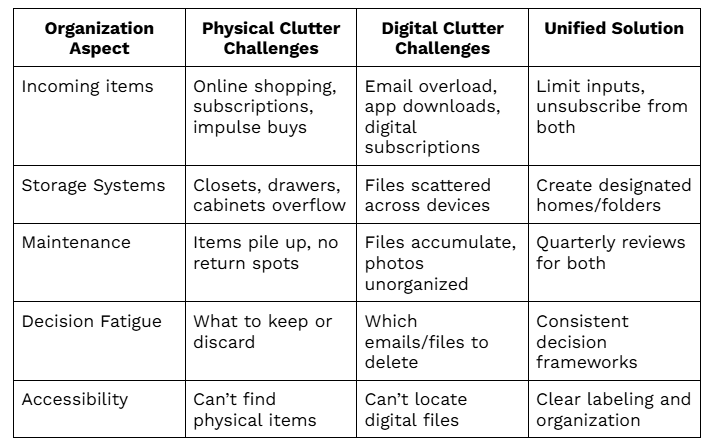
This table illustrates how physical and digital clutter share similar challenges requiring parallel solutions.
The Professional Home Organizer Perspective
Professional home organizers increasingly address both physical and digital organization. While hands-on work focuses on physical spaces, guidance often extends to digital habits affecting physical clutter.
Home organizing services help families understand how their digital lives contribute to physical disorganization. Online shopping habits, subscription services, and technology accumulation all factor into organizational strategies.
A home organizer near you can assess how technology affects your specific situation. Do you buy items online without considering where they'll go? Do subscription boxes arrive faster than you can use the products? Do you keep old electronics because you're unsure how to dispose of them? These patterns require addressing alongside traditional organizing work.
Professional organizers also recognize when digital tools genuinely help versus when they add complexity. They can recommend specific apps or systems that actually simplify rather than complicate your life.
Practical Steps for Modern Families
Fort Worth families managing this dual challenge can implement several practical strategies without overwhelming themselves.
Conduct a digital audit alongside physical decluttering. When organizing a room, also review related digital clutter. Organizing your office? Clean up desktop files. Organizing photos? Sort digital images. Connecting these tasks creates momentum in both areas.
Implement a one-week waiting period for online purchases. Add items to your cart, but wait seven days before buying. This recreates the natural pause that physical shopping provided. Many items you'll decide you don't actually want after waiting.
Establish tech-free zones in your home. Designate certain areas where devices aren't allowed. This reduces the accessories and chargers accumulating throughout your home. It also creates physical spaces free from digital interference.
Review subscriptions quarterly. Both digital subscriptions (streaming services, apps) and physical ones (subscription boxes, deliveries) deserve regular evaluation. Cancel what you're not using. This prevents accumulation in both realms.
Create donation routines. When new items arrive, especially from subscriptions or online orders, immediately identify something to donate. This one-in-one-out approach prevents accumulation. Apply the same principle to apps and digital subscriptions.
When to Seek Professional Support
Many families recognize they need help but wonder whether home organizing services can address these modern challenges. Professional organizers understand how digital habits affect physical spaces and provide strategies for both.
Home organization services offer a perspective you can't achieve alone. An objective professional sees patterns you miss because you're too close to your situation. They identify how specific digital habits create physical clutter in your home.
The investment in home organizing services often pays for itself through prevented purchases and improved decision-making. When you understand what you own and where things belong, you stop buying duplicates. When systems work efficiently, you waste less time searching for items.
For busy professionals and families in the DFW metroplex, this skilled support makes sense. Your time holds value. Hours spent organizing could be spent on priorities you care more about. Professional home organizers can accelerate the organizing process because they offer an objective perspective and proven system.

Transform Your Home for Modern Life
The intersection of digital living and physical clutter requires new approaches to home organization. You can't solve modern organizational challenges with strategies designed for previous generations. Understanding how your digital life affects your physical space represents the first step toward sustainable solutions.
The Organized Nest provides home organizing services throughout Fort Worth, Benbrook, Richland Hills, Burleson, and nearby areas. Our team understands modern families' unique challenges, including how technology affects home organization. We create systems addressing both the physical clutter you see and the digital habits contributing to it.
Whether you need a professional home organizer for specific problem areas or want a whole-home transformation, we provide personalized solutions respecting your time and lifestyle. We recognize that busy professionals and families need systems requiring minimal daily maintenance while delivering maximum functionality.
For clients managing demanding schedules, our virtual organizing services offer professional guidance fitting around your commitments. We can coach you through organizing projects while addressing the digital habits affecting your physical spaces.
Ready to address both digital and physical organization challenges? Call us at (817) 720-3505 or email us at [email protected] to schedule your consultation. Let's create organized spaces that work for how you actually live in the modern world.