
Before Summer Hits, Here Is What Your Kitchen Actually Needs
Spring represents the ideal season for tackling kitchen organizing projects, as renewed energy and seasonal transitions create natural momentum for transformation. The kitchen's central role in daily life makes it prime for professional attention, and spring's fresh-start mentality provides the perfect psychological backdrop for implementing lasting organizational systems. Kitchen organization services completed now set you up for easier meal preparation, entertaining, and daily routines throughout the entire year.
At The Organized Nest, we have seen firsthand how spring shifts priorities for Fort Worth homeowners. The mild temperatures make it easy to work through your home, the season naturally inspires a reset, and there is still breathing room before summer takes the calendar. Your kitchen is one of the highest-impact spaces we work in, and spring is exactly when we love to transform it.

Key Takeaways
1. Spring's natural energy surge and seasonal transition mentality create ideal psychological and practical conditions for kitchen organizing projects, offering a timing advantage that makes transformation feel more achievable than during other seasons.
2. Eliminating kitchen clutter reduces housework by 40% while improving daily meal preparation efficiency, with organized kitchens returning hours to your week through streamlined cooking, cleanup, and food management processes.
3. A professional kitchen organization service typically wraps up in 1-3 days. Doing it yourself spreads that same work across 15-30 hours over several weeks. Beyond the time savings, you get product recommendations and systems built specifically around how your family cooks and uses the space.
4. Effective kitchen organizing relies on functional zones, vertical space maximization, complete kitchen drawer organization, clear pantry containers, and pull-out systems that work for your actual daily routines rather than idealized behaviors.
5. Spring kitchen organization sets the foundations for easier entertaining throughout summer and fall while establishing maintenance habits like daily resets and monthly reviews that keep systems functional year-round without requiring major reorganization efforts.
Why Spring Timing Makes Sense for Kitchen Projects
Spring naturally aligns with organization initiatives for several practical and psychological reasons. Understanding these factors helps you recognize why acting now makes more sense than waiting for other seasons.
Energy levels peak in spring.
After winter's shorter days and indoor focus, spring brings increased energy and motivation. You feel ready to tackle projects you've postponed. This natural energy surge makes organizing efforts feel less daunting than they would during winter's low-energy periods or summer's busy activity schedules.
This seasonal energy shift affects professional organizers, too. Kitchen organization services book heavily in spring as families capitalize on this motivation. Scheduling services now ensures availability before the season fills completely.
Seasonal transitions encourage reassessment.
Spring cleaning traditions exist because seasonal changes prompt natural evaluation of our spaces. You're already thinking about refreshing your home. This mindset extends perfectly to kitchen organizing, where reassessing storage, purging expired items, and updating systems make sense alongside other spring renewal activities.
Entertaining seasons approach.
Spring leads into summer's outdoor gatherings, holiday hosting, and fall celebrations. Organizing your kitchen now means you're prepared for these entertaining periods. When guests arrive, you'll have organized spaces supporting easy meal preparation rather than stressing about cluttered counters and disorganized pantries.
Children's schedules shift.
School years wind down, and summer camps begin. These transitions affect family meal patterns and kitchen usage. Spring timing lets you establish organization systems that work for changing routines before summer's schedule disruptions arrive.
Food storage needs evolve.
Winter's hearty meals give way to lighter spring and summer eating. Your kitchen organization should reflect these shifts. Spring provides the perfect time to reorganize based on seasonal food preferences, moving heavy equipment back while bringing forward items needed for grilling and fresh meal preparation.
The Kitchen's Central Role Demands Organization
Research shows that eliminating clutter accounts for a 40% reduction in housework in average homes. Kitchens particularly benefit from this principle because they're used multiple times daily by multiple family members.
Disorganized kitchens create cascading problems throughout your day. Morning coffee takes longer when you can't find supplies. Meal preparation becomes frustrating when tools and ingredients hide in cluttered drawers and cabinets. Cleanup extends when items lack proper homes. These inefficiencies compound across meals and days.
Organized kitchens transform daily routines. You find ingredients quickly. Tools occupy logical spots. Meal prep flows smoothly. Cleanup takes minutes rather than extended periods. These improvements return hours to your week while reducing meal-related stress.
The kitchen also affects broader household dynamics. When kitchen organization works well, family members can help with meals without constant direction about where items go. Children can pack lunches independently. Partners can prepare dinners without interrupting your work. Guests can help themselves to drinks without asking where the glasses are.
For families throughout Fort Worth and nearby areas, this independence matters. Busy schedules demand efficiency. Well-organized kitchens provide the foundation for smooth household operations even during demanding weeks.
Signs Your Kitchen Needs Professional Attention
Many families struggle with kitchen organizing without recognizing they'd benefit from professional help. These signs indicate that your kitchen would improve through kitchen organization services.
You can't find items you know you own.
That specific pan, the measuring cup you use regularly, or the tool you need for a recipe hides somewhere in your kitchen. You waste time searching or settle for less-than-ideal alternatives. This searching indicates organizational systems aren't working.
Counters stay perpetually cluttered.
Items without proper storage spots migrate to counters. Small appliances, mail, keys, and miscellaneous objects accumulate. Despite clearing counters regularly, clutter returns within hours. This pattern suggests insufficient storage systems rather than cleaning problems.
Drawers jam from overcrowding.
Your kitchen drawer organizer systems (if they exist) overflow with utensils, tools, and miscellaneous items. You struggle to close drawers fully. Finding specific items requires digging through jumbled contents. This overcrowding signals a need for better organization and likely purging of unnecessary items.
Expired food fills your pantry.
You discover outdated items regularly. Duplicates hide behind other products. You buy items you already own because you can't see existing stock. These issues indicate pantry organization problems requiring systematic solutions.
Meal preparation feels consistently stressful.
Cooking should be enjoyable, but you dread the process. Not because you dislike cooking itself, but because accessing ingredients and tools frustrates you. This stress often stems from organizational issues rather than culinary challenges.
Studies indicate 54% of Americans feel overwhelmed by clutter in their homes. Kitchens contribute significantly to this overwhelm because their importance to daily life makes disorganization impossible to ignore.
What Kitchen Organization Services Actually Include
Understanding what professional kitchen organizing involves helps families recognize the value these services provide beyond simple tidying.
Complete assessment of current systems.
Kitchen organizers evaluate your entire kitchen's functionality. They observe how you use the space, identify problem areas, and understand your cooking patterns. This assessment reveals opportunities you might miss because you're accustomed to current (inefficient) systems.
Strategic product recommendations.
Professional organizers know which kitchen organizer products work well and which fail. They understand proper measurements, quality indicators, and where to source items. These skills prevent purchasing mistakes that waste money on products that don't fit or function properly.
Full implementation support.
Services include hands-on work sorting items, installing systems, and creating organizational logic. You're not just receiving advice; you're getting complete project implementation. Professional organizers handle the physical work while keeping you involved in decision-making about what to keep and where items should live.
Customized kitchen organization ideas.
Rather than applying generic solutions, professional services adapt to your specific needs. Your cooking style, family size, kitchen layout, and aesthetic preferences all inform the organizational approach. The resulting systems work for your actual life rather than idealized behaviors.
Maintenance guidance.
Beyond initial organization, professionals teach you how to maintain systems. They explain the logic behind their decisions so you understand where new items should go. When you understand how the system works, maintaining it becomes second nature.
Kitchen Organization Ideas That Actually Work
Effective kitchen organizing relies on principles that work across different kitchen sizes and layouts. These ideas translate well to various situations while adapting to specific needs.
Create designated zones for different functions.
Group items by use rather than item type. Keep baking supplies together, even if that means separating similar items stored elsewhere. Create a coffee station with everything needed for morning caffeine. Establish a kids' snack zone that they can access independently. These zones reduce searching and improve efficiency.
Maximize vertical space in cabinets.
Most people only use the bottom half of their cabinet space effectively. Stackable shelf organizers, hanging racks, and tiered systems double usable storage by creating additional levels. This vertical approach accommodates more items without requiring additional cabinets.
Implement drawer dividers throughout.
Every kitchen drawer benefits from organization systems. Cutlery dividers are obvious, but other drawers need systems too. Adjustable dividers corral cooking utensils, measuring tools, and miscellaneous items. These systems prevent the jumbled mess that makes finding items difficult.
Use clear containers for pantry organization.
Transferring items to clear, labeled containers transforms pantry functionality. You see contents at a glance, notice when items run low, and prevent pests from accessing food. This system works particularly well for baking supplies, grains, pasta, and snacks.
Establish pull-out systems for deep cabinets.
Corner cabinets and deep lower cabinets create black holes where items disappear. Pull-out shelves, lazy susans, and drawer systems bring everything into view with one motion. These mechanisms transform wasted space into functional storage.
Professional Services vs. DIY: Making the Decision
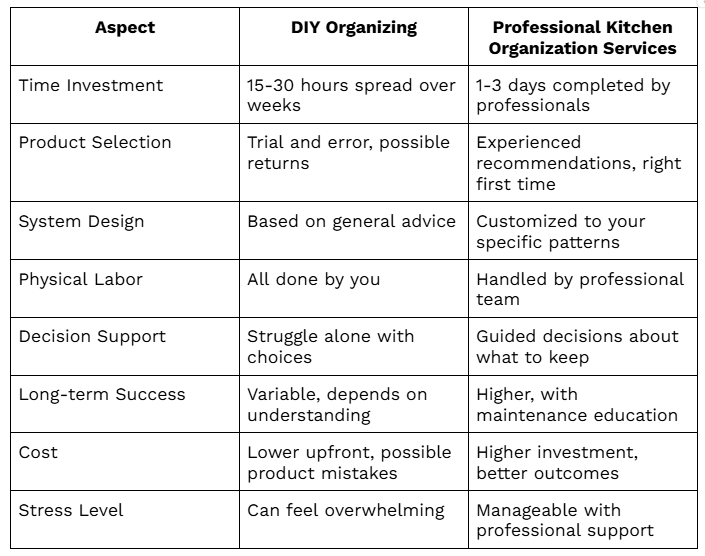
This comparison illustrates why many busy professionals and families choose kitchen organization services despite higher costs. The time savings, firsthand knowledge, and reduced stress justify the investment for families valuing their time and wanting reliable results.
Spring Kitchen Organization Checklist
Spring kitchen organizing follows a logical progression, making sure nothing gets overlooked. This sequence creates momentum while preventing overwhelm.
Week 1: Assessment and planning.
Schedule a consultation with kitchen organization services if using professionals. Alternatively, assess your kitchen yourself, noting problem areas, measuring cabinets, and photographing the current state. This documentation helps track progress and informs planning.
Week 2: Purge and sort.
Remove everything from one section at a time. Sort items into keep, donate, and discard categories. Check expiration dates on food items. Evaluate whether you actually use each tool and appliance. This sorting often reveals that you can eliminate 20-30% of kitchen contents.
Week 3: Implement systems.
Install new kitchen drawer organizers, shelf systems, and containment solutions. Return items to their new designated homes. Label shelves and containers to maintain organization. This implementation week transforms your kitchen's functionality.
Week 4: Adjust and refine.
Live with your new systems for a week, noting what works and what needs adjustment. Move items that don't occupy optimal locations. Add labels where needed. Make final tweaks so that systems support your actual routines.
This four-week timeline accommodates working with kitchen organization services or completing projects yourself. Professional services compress weeks 2-3 into intensive days rather than extended periods.
Maintaining Kitchen Organization Beyond Spring
Spring organization creates the foundation, but maintenance provides longevity. These habits keep kitchens functional long after initial projects are complete.
Implement daily resets.
Spend 10 minutes before bed returning items to their designated spots. This brief daily investment prevents clutter accumulation and keeps systems functioning. Morning kitchens start organized when you reset nightly.
Conduct monthly mini-purges.
Set a recurring calendar reminder to check expiration dates, assess whether items you're keeping actually get used, and reorganize any areas slipping into disorder. Fifteen minutes monthly prevents major reorganization needs.
Seasonal transitions prompt reviews.
Each season brings different cooking patterns. Review kitchen organization quarterly, moving seasonal items to appropriate accessibility levels. Store holiday baking supplies after the season. Bring grilling tools forward in spring.
Honor the one-in-one-out rule.
When acquiring new kitchen items, remove something else. This prevents gradual accumulation that eventually requires another major organizing project. The rule maintains the balance you established during spring organization.
Transform Your Kitchen This Spring
Spring offers the perfect timing for addressing kitchen organizing projects you've postponed. The season's energy, symbolic fresh start, and practical scheduling advantages create optimal conditions for transformation. Your kitchen deserves the same attention you give other areas of your beautiful home.
The Organized Nest provides kitchen organization services throughout Fort Worth, Benbrook, Richland Hills, Burleson, and nearby areas. Our team understands how kitchens function for busy families and creates systems supporting your lifestyle. We've helped hundreds of clients transform cluttered, frustrating kitchens into spaces they enjoy using daily.
Whether you need complete kitchen organizing from pantry to cabinets or targeted help with specific problem areas, we design solutions matching your needs. Our home organizing services extend throughout your home, recognizing that kitchen organization often connects to broader household systems.
For clients managing demanding schedules, our approach minimizes disruption while maximizing results. We work efficiently, completing projects in concentrated timeframes rather than stretching them across weeks. You maintain your normal routines while we transform your kitchen.
Ready to start your spring kitchen reset? Call us at (817) 720-3505 or email us [email protected] to schedule your consultation. Let our team at The Organized Nest create the organized, functional kitchen you deserve before summer activities begin.